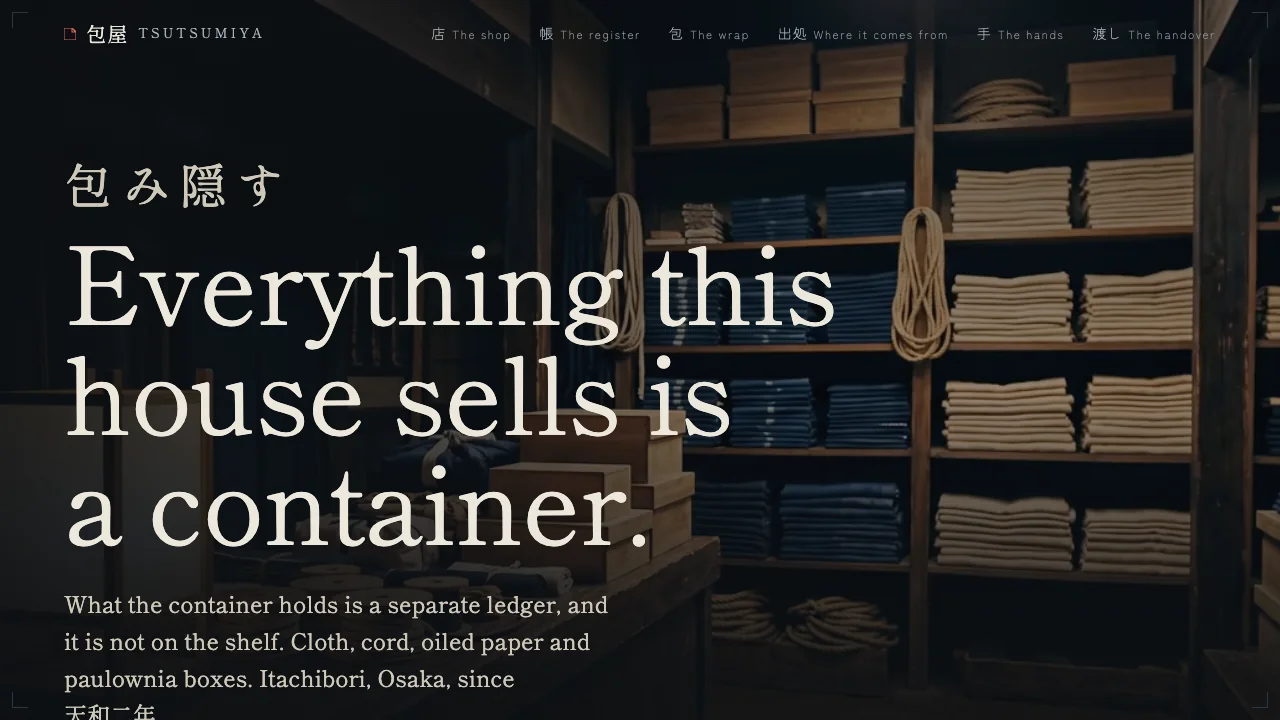
Foundry Series · Nocturne · Concept study
Tsutsumiya
This house does not make the thing. It makes the thing unseen — and that is the harder craft.
Tsutsumiya turns a canal-side wrapping house into a constraint-led commerce system. Cloth capacity, object weight, provenance, and six practiced knots determine what can leave the house—and how.
The premise
The container is the product.
A conventional store begins with inventory and adds packaging at the end. Tsutsumiya reverses that logic: the cloth is the governing constraint, so weight, volume, knot, and journey shape the purchase from the beginning.
The result is commerce that feels inseparable from the place, rather than a generic storefront wearing period styling.
Product principles
The world becomes a working system.
01 · Constraint
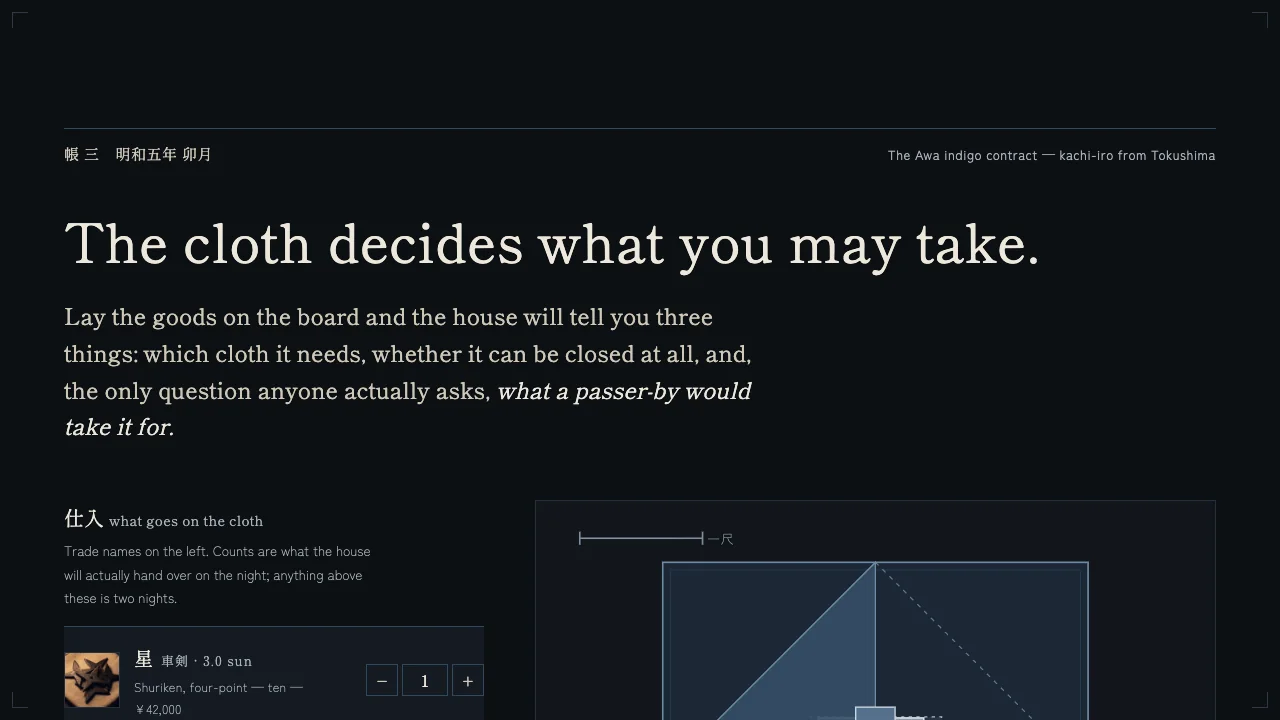
Cloth decides what may be taken.
The wrapping surface behaves as an interface: capacity, weight, and parcel geometry produce an honest verdict before an order can proceed.
02 · Commerce
Buying stays inside the world.
Ledger, provenance, wrapping, and dispatch form one continuous sequence instead of collapsing into a detached checkout flow.
03 · Evidence
Trust is made visible.
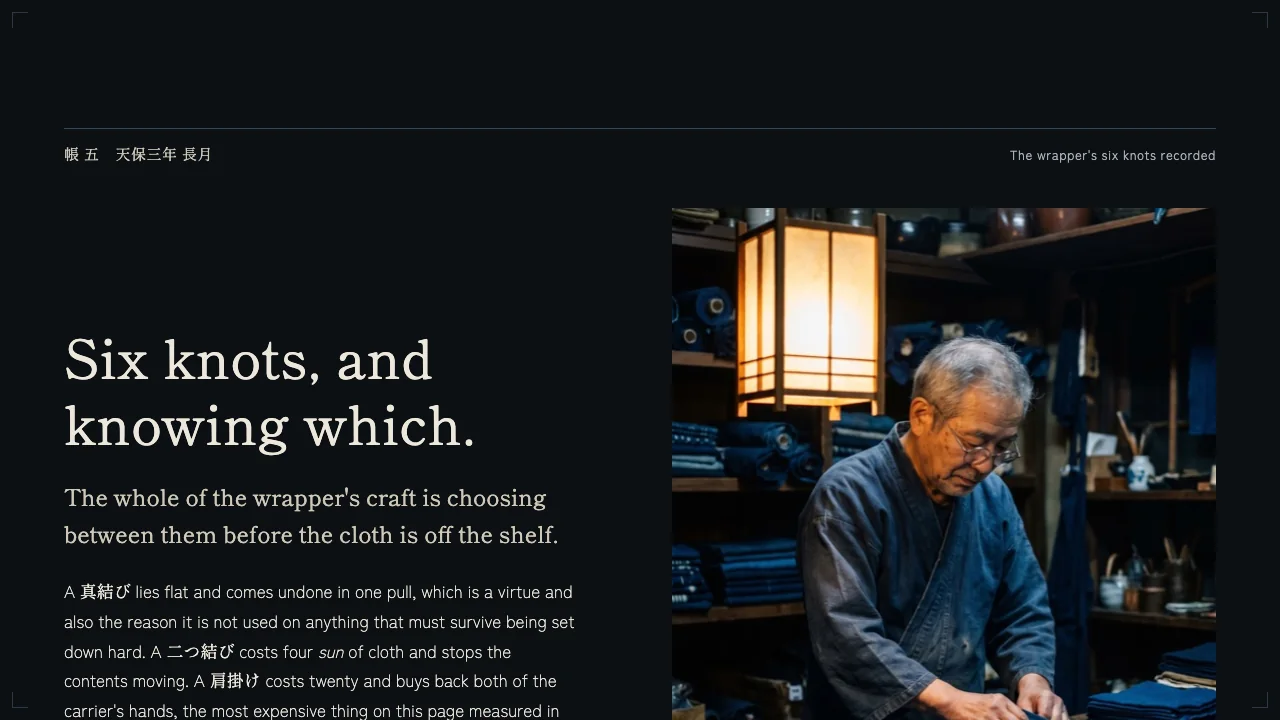
Sources, material histories, and six named knots let proof carry the story rather than relying on atmosphere alone.
Built proof
A concept carried into code.
Worldbuilding · Interaction design · Commerce
- Chō
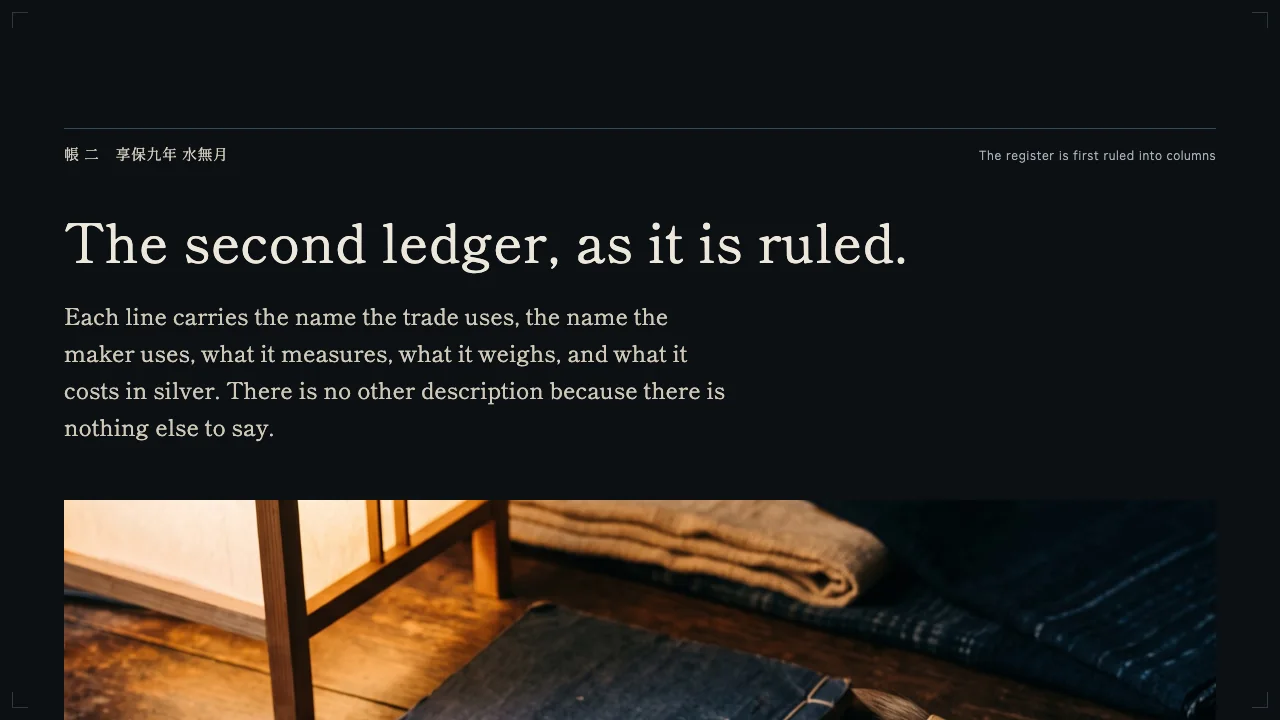
- A second ledger gives inventory and provenance the cadence of a merchant record rather than a product grid.
- Tsutsumi
- An interactive configurator lets visitors place wares, test cloth capacity, and understand why a parcel can—or cannot—be made.
- Dedokoro
- Provenance remains attached to each object so source and material stay visible at the point of decision.
- Te
- Six wrapping knots turn tacit maker knowledge into a legible, repeatable system.