Working product prototype · Product strategy · UX design · Design systems · Frontend
Sojurno
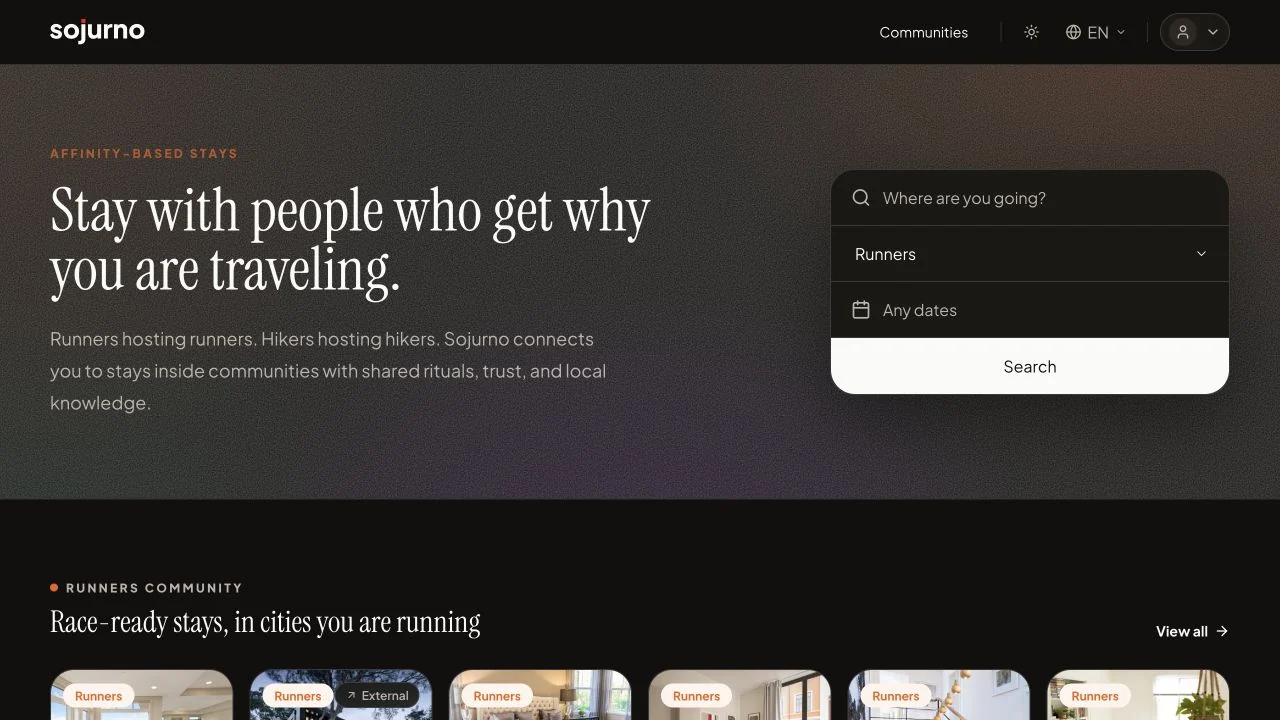
Stay with people who get why you are traveling.
Sojurno is an affinity-based stays marketplace for people who travel with a shared purpose. One platform supports distinct communities—runners, hikers, climbers, and the groups that follow—while allowing each one to carry its own vocabulary, trust signals, discovery patterns, and practical needs.
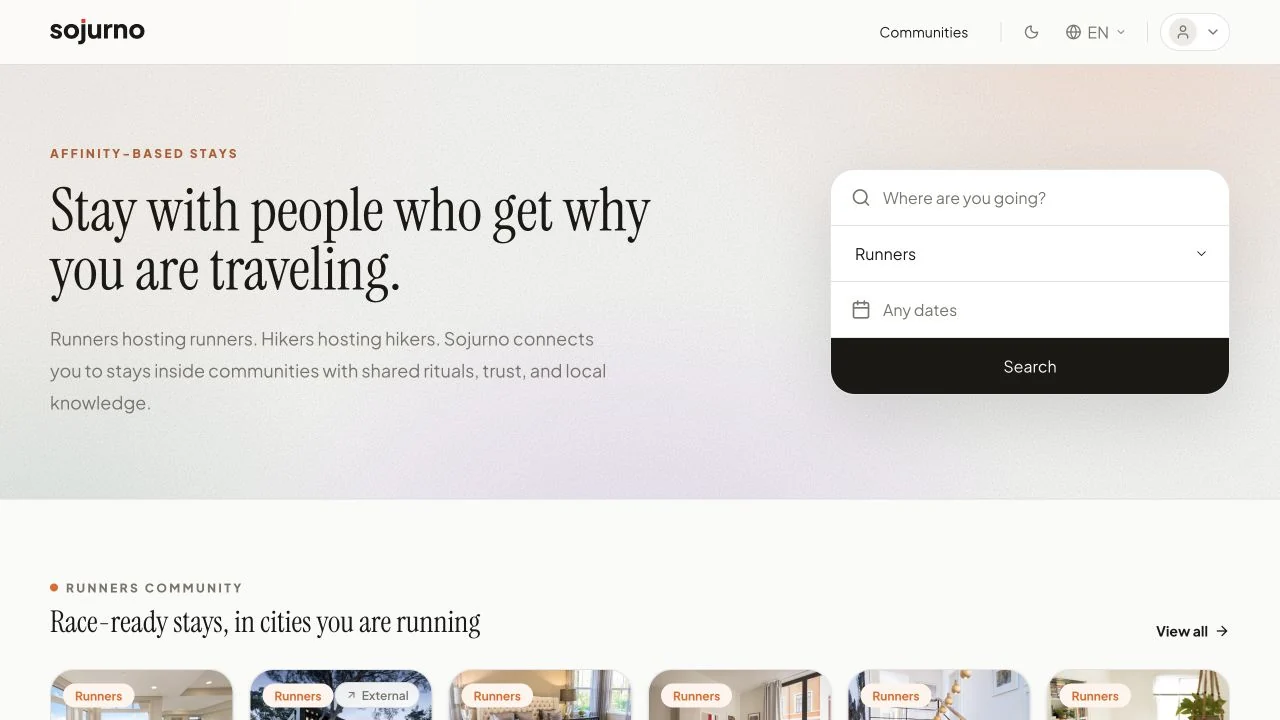
The problem
Travel marketplaces describe the room. They rarely understand the reason for the trip.
Most stay platforms optimize around inventory, price, and location. A runner choosing a marathon stay or a hiker choosing a trailhead cabin needs different evidence: start-line access, a pre-dawn kitchen, drying space, route knowledge, loaner gear, and a host who understands the ritual can matter as much as the room itself.
Treating community as a filter leaves those needs outside the product; building a separate marketplace for every affinity repeats the same booking machinery. The problem is to make purpose shape discovery and trust without fragmenting the platform.
The tenant system
One platform. Different reasons to travel.
The shared mechanics remain stable. Each community changes what the product notices, names, and treats as proof.
Shared platformSearch · Stay · Host · Trust · Book
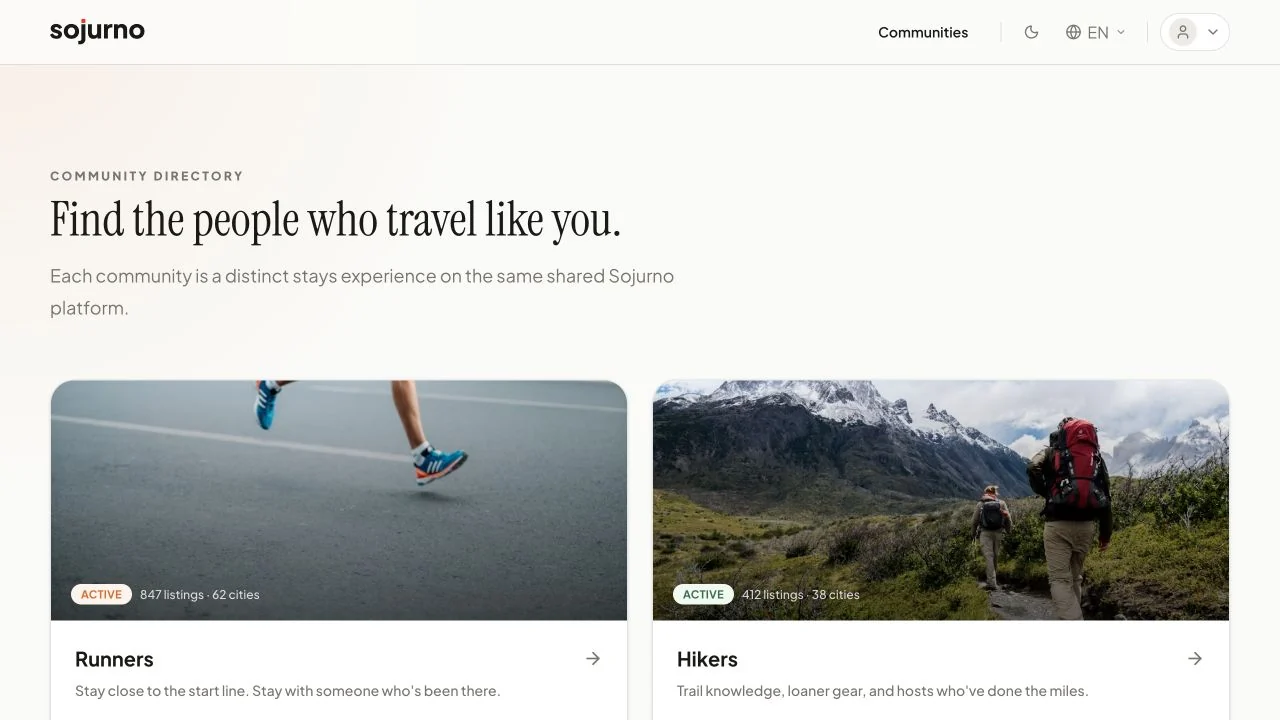
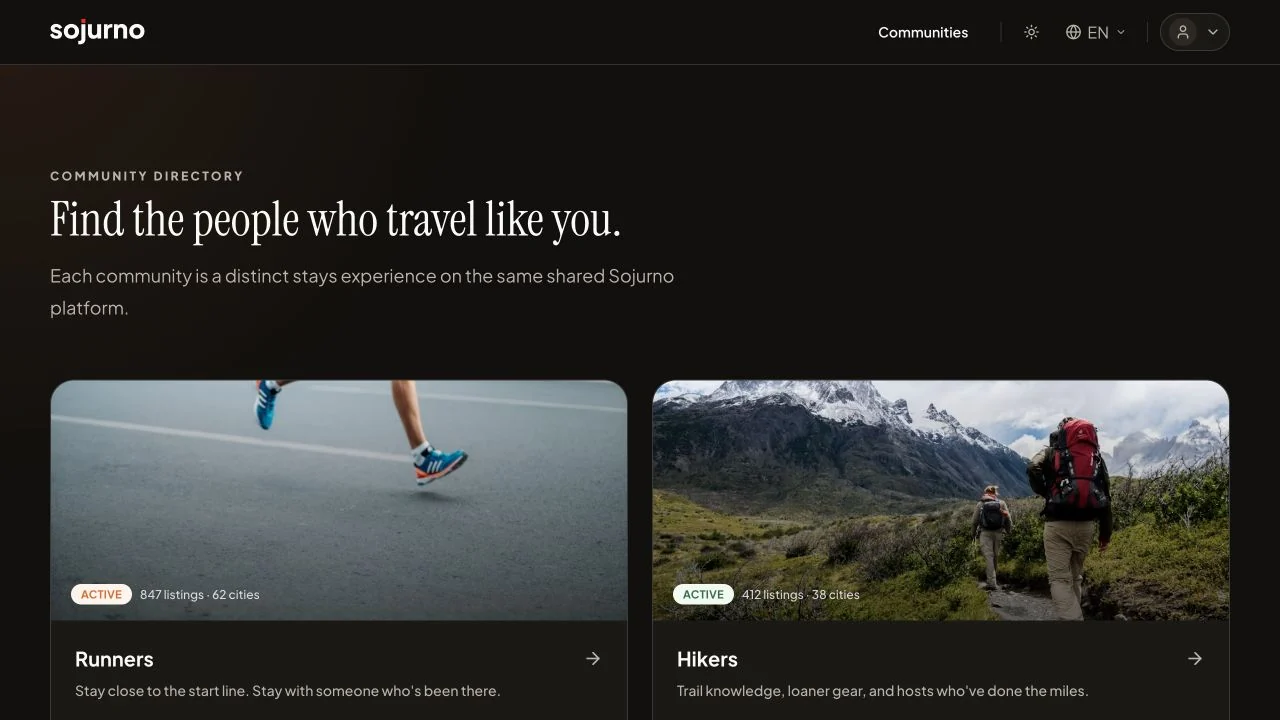
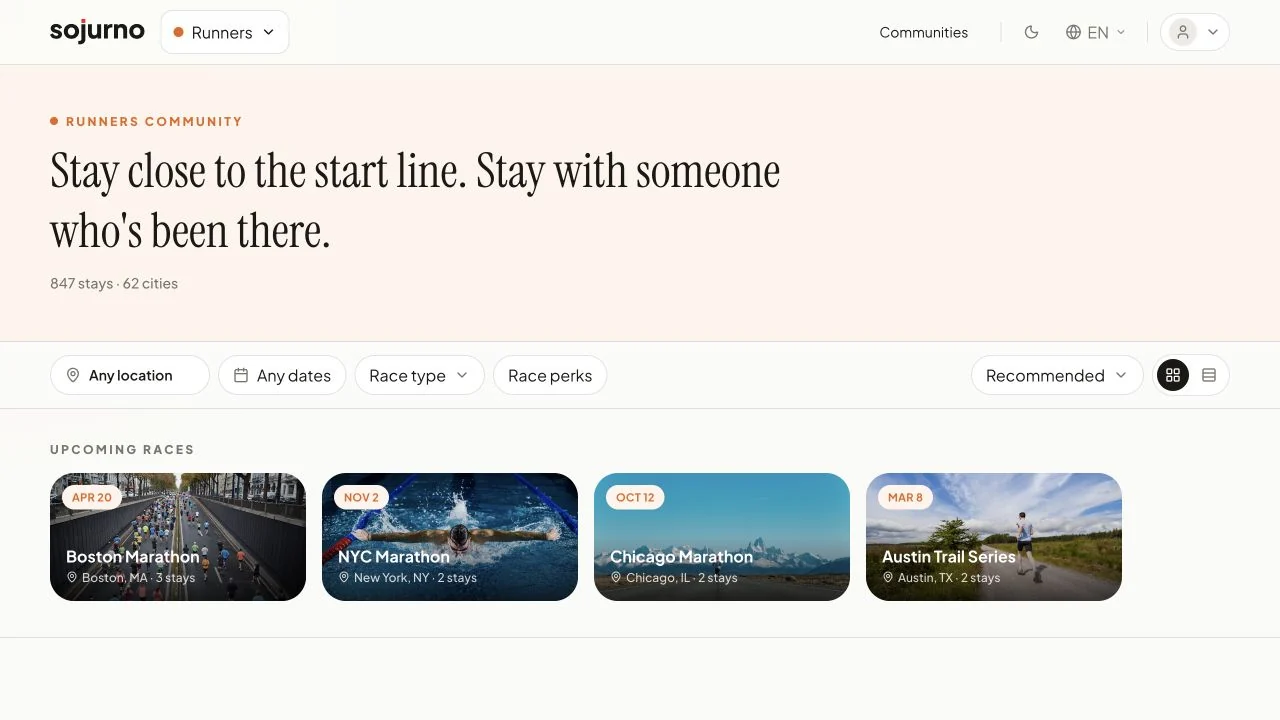
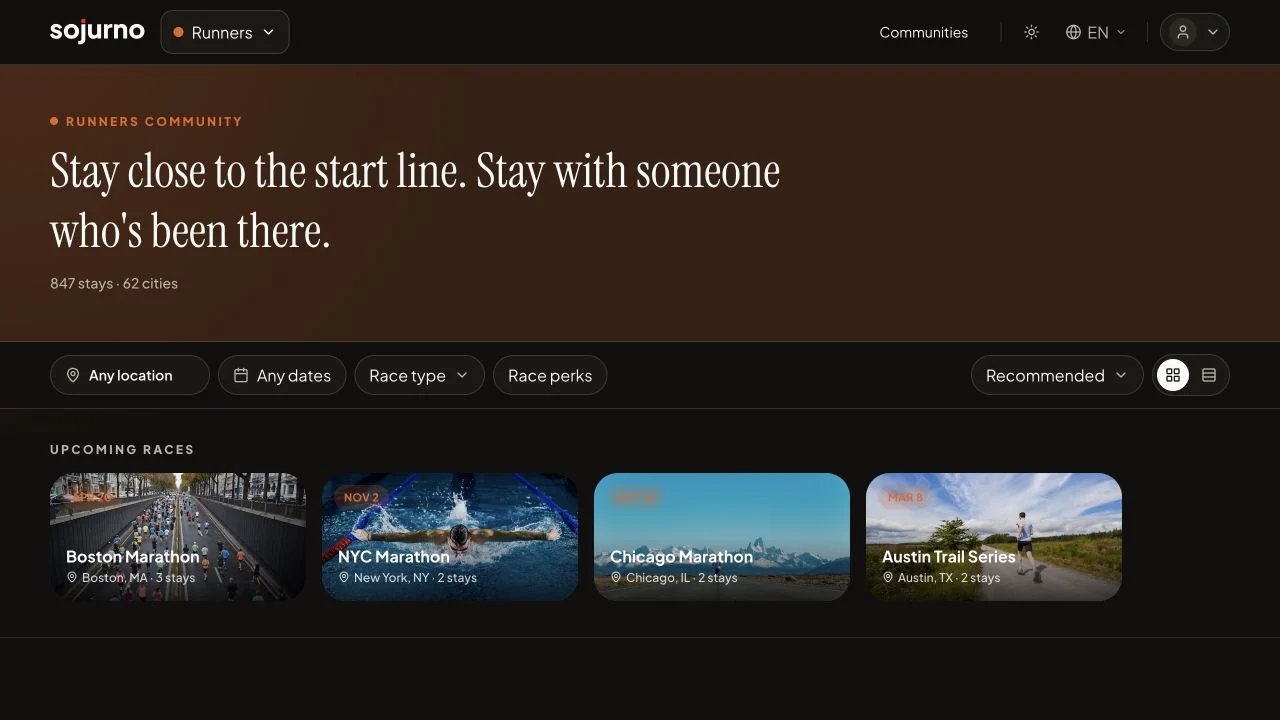
Runners
Stay close to the start line. Stay with someone who has been there.
- Discovery
- Race type, upcoming races, start-line access, and race-week logistics
- Trust
- Marathons hosted, coaching experience, early breakfast, shakeout routes
Hikers
Trail knowledge, loaner gear, and hosts who have done the miles.
- Discovery
- Trailheads, trip type, route notes, weather, and gear readiness
- Trust
- Local beta, drying walls, bear canisters, access and timing knowledge
Climbers
Near the crag. Hosted by people who know the grades.
- Discovery
- Crag proximity, climbing type, grades, approach, and gear storage
- Trust
- Route knowledge, equipment context, conditions, and local partners
Trust made practical
Familiarity becomes product evidence.
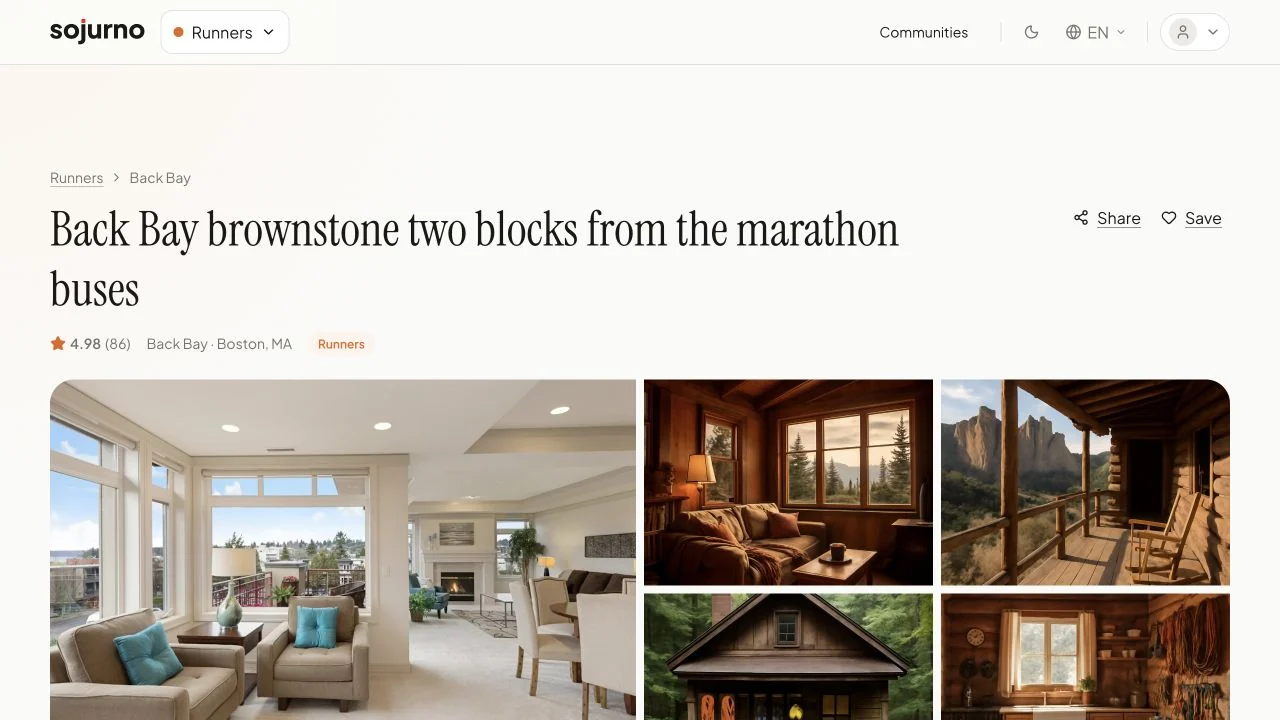
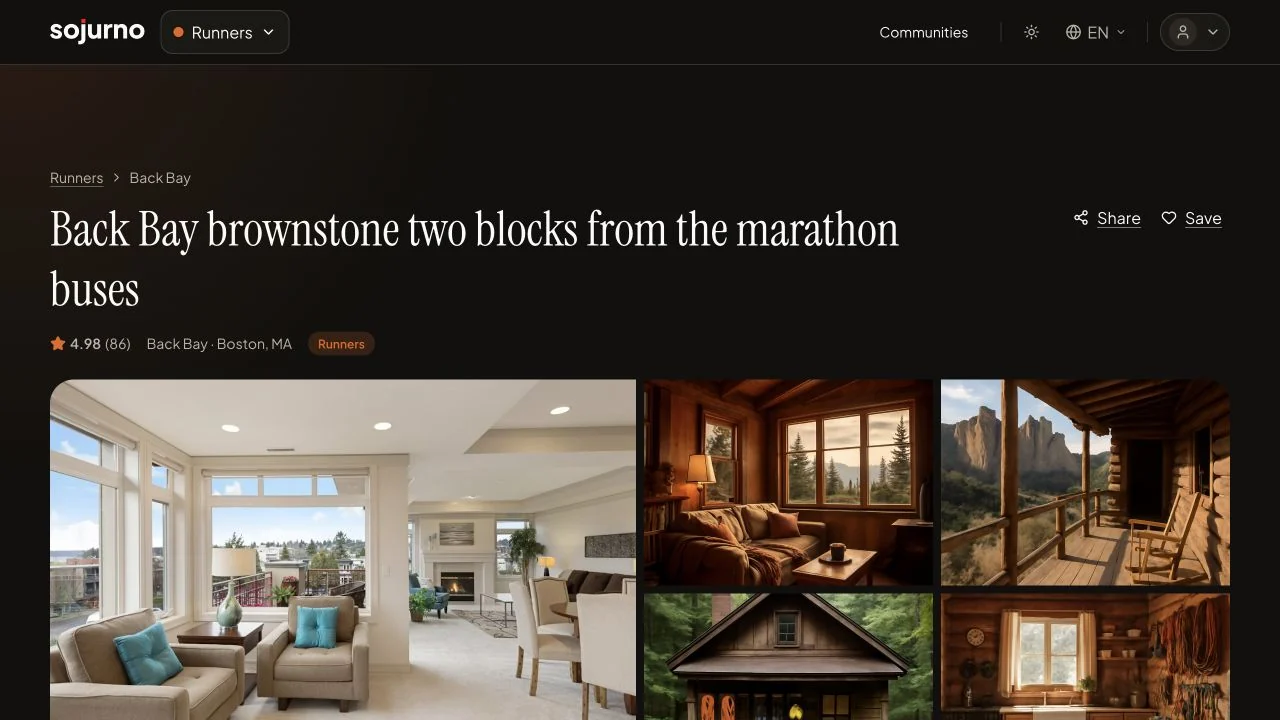
For a Boston Marathon stay, Sojurno does not stop at bedrooms and distance.
- Host context12 marathons hosted
- Trip supportStart-line shuttle · early breakfast · foam roller
- Host knowledgeAn easy shakeout loop along the Charles
- Community reviewCoffee at 5am · route maps ready · recovery snacks
Product principles
Community changes the interface.
Context before inventory
The purpose of the trip determines what is prominent: race calendars for runners, trail access for hikers, and crag knowledge for climbers.
Trust through lived experience
Host credentials, community reviews, and specific acts of preparation make affinity useful instead of leaving it as a badge.
One engine, distinct language
The booking mechanics stay coherent while tenant configuration changes vocabulary, taxonomy, color, imagery, trust signals, and enabled capabilities.
Practical details carry the brand
A foam roller, an early kitchen, a drying wall, route notes, or secure gear storage says more than generic hospitality language.
Built proof
The product thesis reaches the code.
- Application
- React and TypeScript marketplace prototype with community-aware routes and typed product data
- Tenant model
- Shared platform components configured by community vocabulary, palette, taxonomy, trust signals, and capabilities
- Design system
- Token-led component library documented in Storybook with variants, states, and accessibility notes
- Discovery
- Community collections, purpose-specific filters, host context, perks, and grid/list views
- Stay flow
- Community-aware listing details, reviews, availability, pricing, save/share actions, and booking request
- Accessibility
- Semantic landmarks, skip links, keyboard-operable controls, visible labels, theme support, and documented baselines