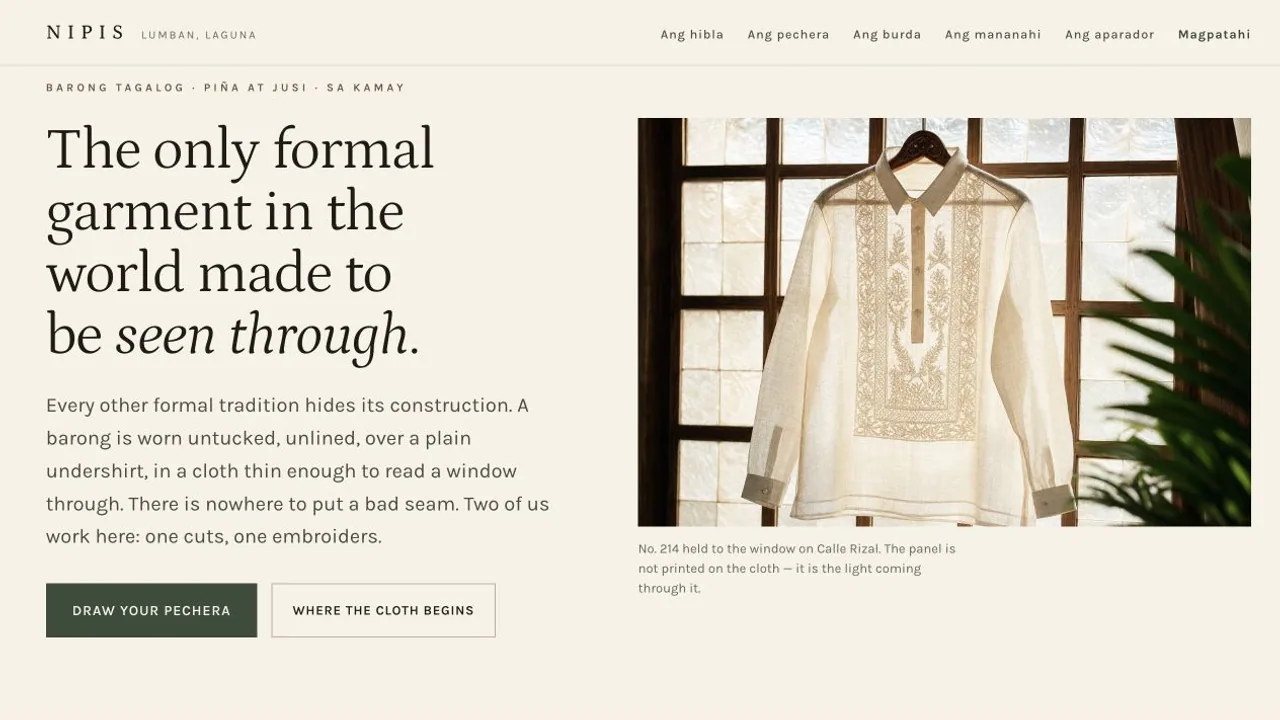
Foundry Series · Concept study
Nipis
The only formal garment in the world made to be seen through.
Nipis frames the barong Tagalog through its defining material intelligence: pineapple fibre, translucent structure, and hand embroidery. The experience connects fibre, panel, pattern, and maker so cultural specificity remains legible at every scale.
The premise
Transparency is not a limitation. It is the design system.
A barong is often presented as an ornamental finished garment. Nipis instead begins with the material conditions that make it possible: the fibre, the open panel, the embroidery field, and the hands that negotiate all three.
The system gives each layer its own role while preserving the restraint and lightness of the whole.
Product principles
The world becomes a working system.
01 · Material
The fibre is the message.
Pineapple cloth is treated as an active constraint that governs density, light, and construction.
02 · Composition
The panel becomes a canvas.
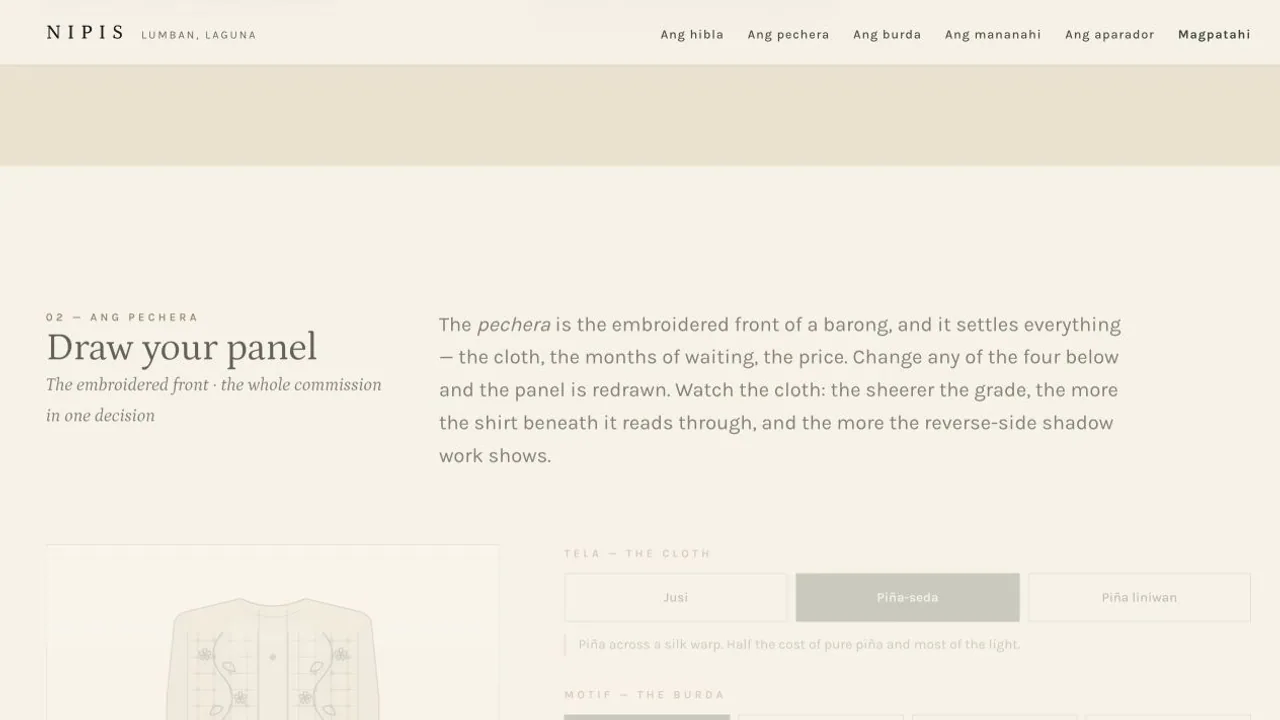
An interactive pechera makes placement and scale tangible without flattening embroidery into decoration.
03 · Provenance
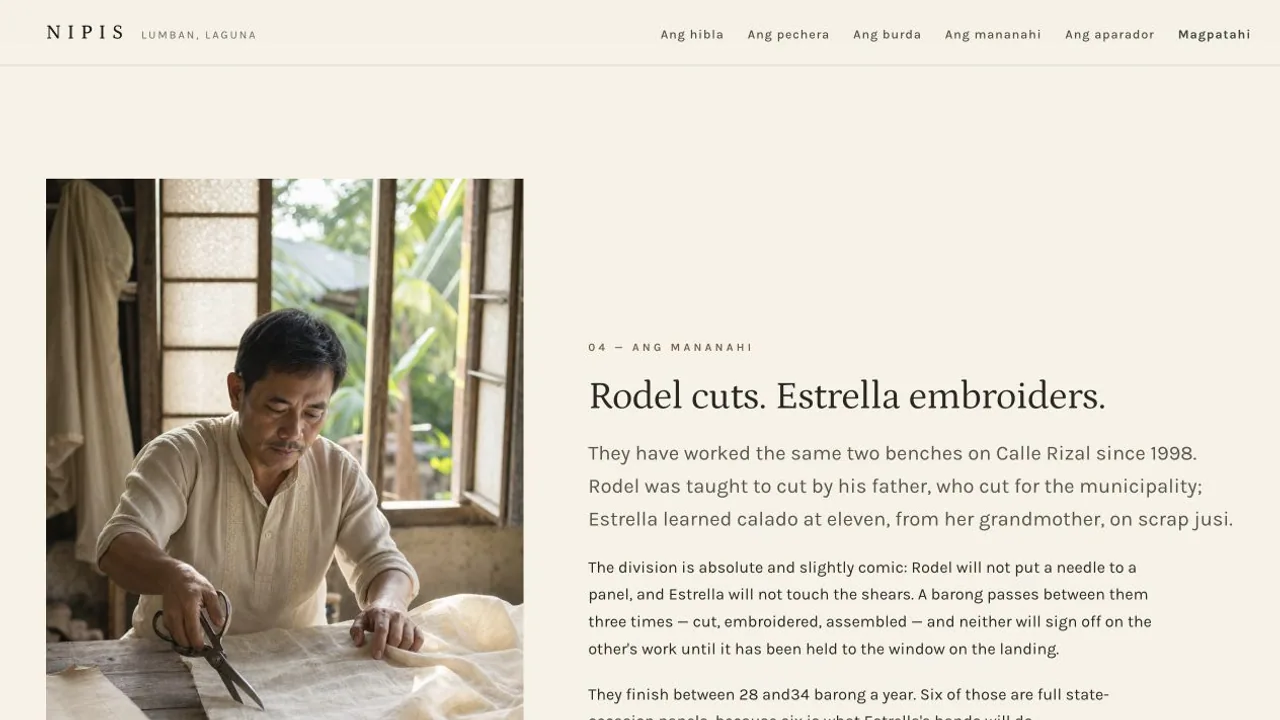
Making stays named.
Cutting and embroidery remain attributed to the people whose judgment gives the garment its character.
Built proof
A concept carried into code.
Systems thinking · Art direction · Interactive embroidery · Frontend
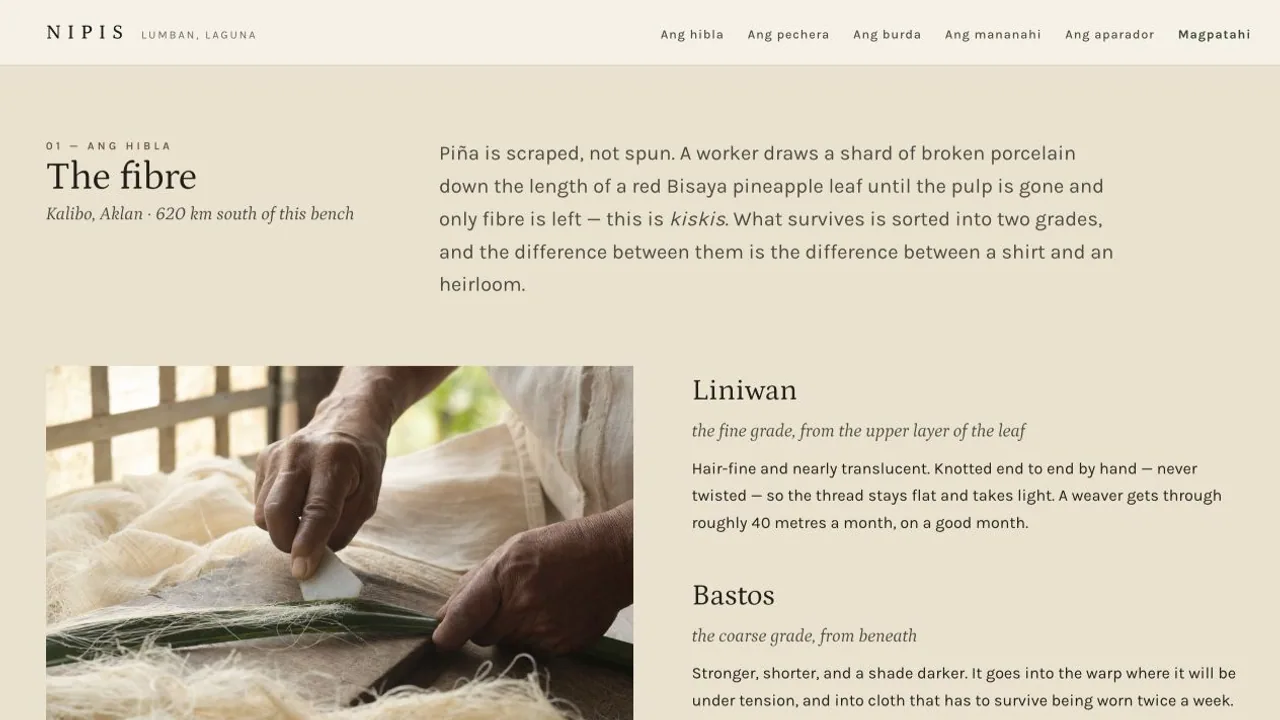
- Hibla
- The fibre story establishes the physical and cultural foundation before presenting the garment.
- Pechera
- A compositional tool turns the embroidered front panel into an explorable design surface.
- Burda
- Pattern structure connects visual decisions to the actual geometry of construction.
- Mananahi
- Maker profiles preserve authorship and distinguish the specialized roles behind the finished piece.