Foundry Series · Pastorale · Concept study
BENT
The ride is not the wood. The ride is the replacing.
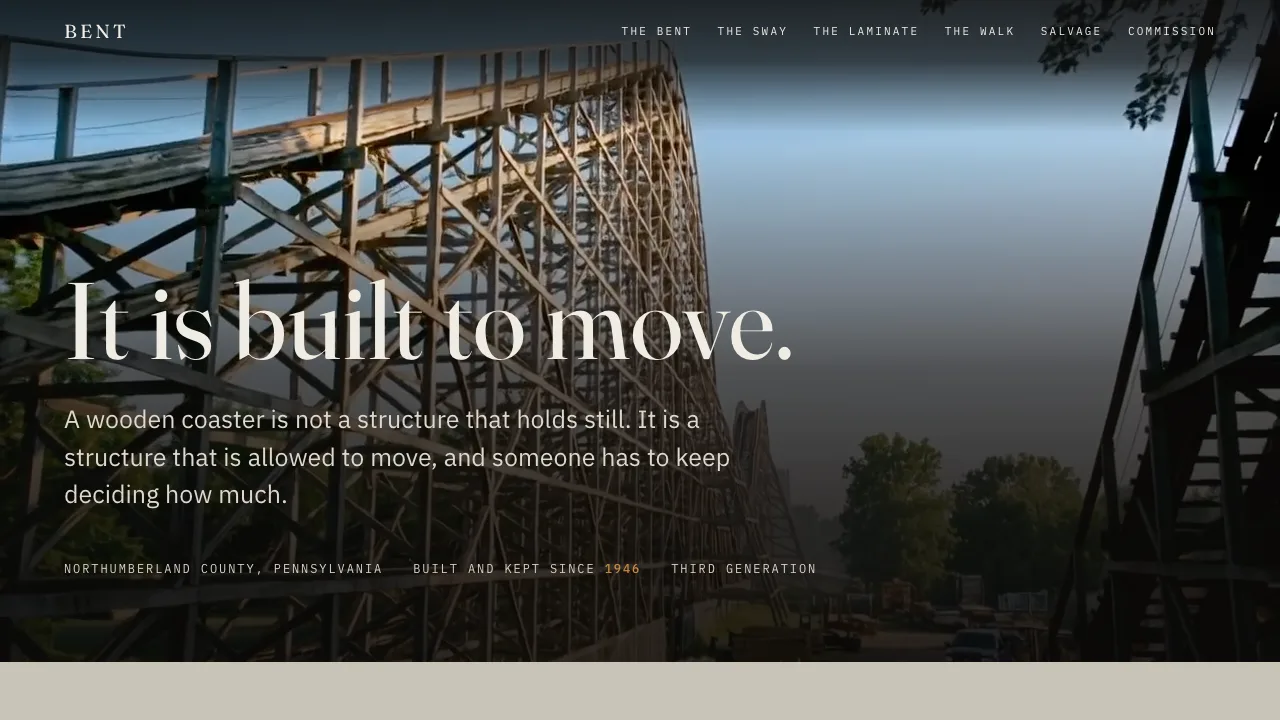
BENT is a wooden roller coaster works, presented as a building trade rather than an attraction. A bent is the A-frame unit timber framers have named for four hundred years, and it is also what a coaster is: one bent, repeated, until it reaches the end of the land.
The premise
A maintained structure is a loved structure.
Wooden coasters are rarely demolished. They are retracked — the top layers of pine cut out and replaced a few feet at a time, every spring, for as long as the ride stands. A coaster built in 1947 may contain almost none of its 1947 wood.
People read that as loss. The site argues the opposite: the replacing is the craft, and the crew that shows up in March with a saw is the reason the ride is still standing. Every design decision follows from that — including the accent, which is fresh-cut pine, and so marks only where the work last touched the structure.
Product principles
The world becomes a working system.
01 · Movement
It is built to move, on purpose.
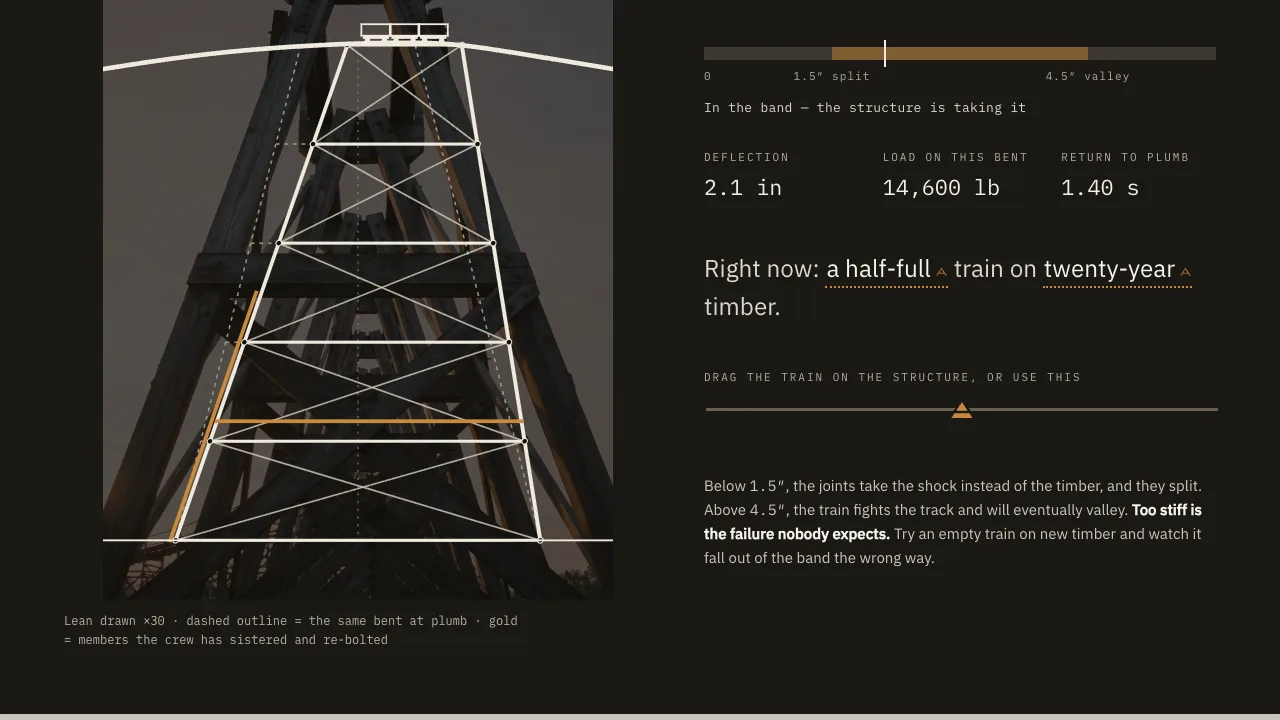
A wooden coaster is not held still; it is allowed to lean and come back. Built rigid, the joints take the shock instead of the timber and split. Too stiff is the failure nobody expects.
02 · Band
The tolerance is the whole argument.
Deflection has to land between one and a half and four and a half inches. The reader pushes a train across a bent and watches it fall out of the band in either direction, which is a thing no caption can assert.
03 · Record
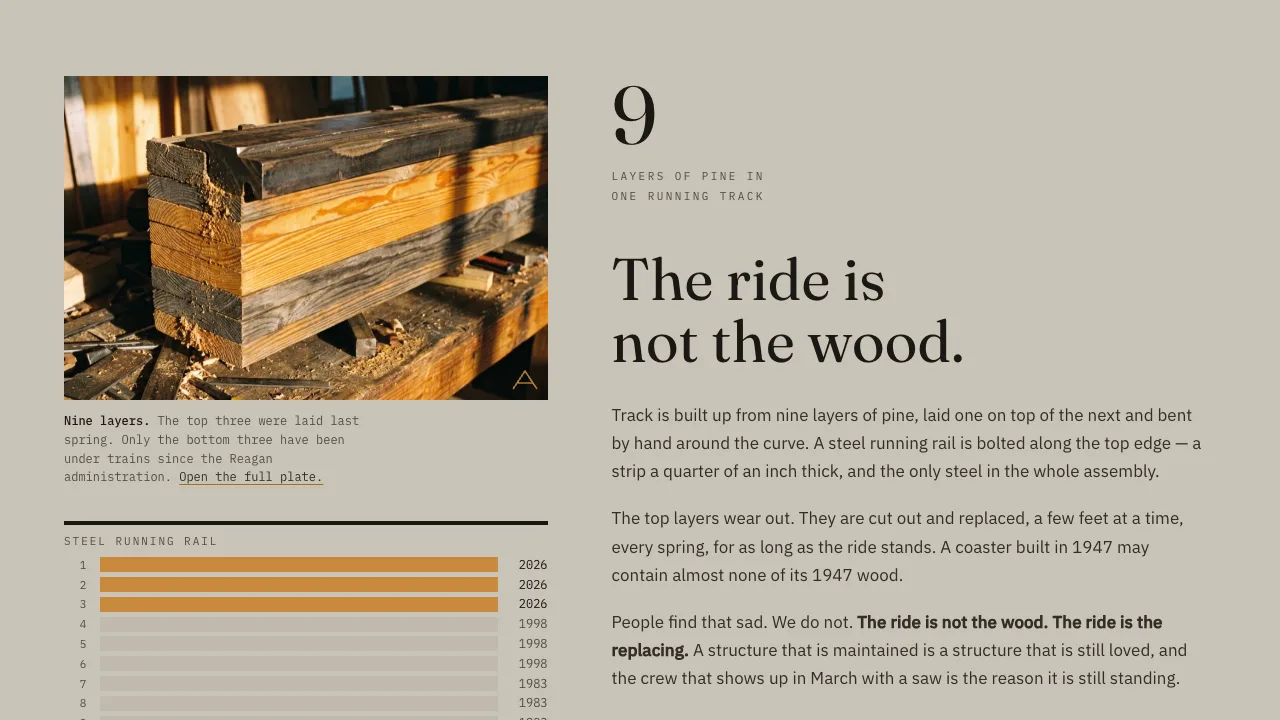
Nine layers, each with a date.
Running track is nine laminated layers of pine, and the site prints the year each one was laid. Six of the nine have been cut out and replaced at least once; the diagram is the Ship of Theseus, dated.
Built proof
A concept carried into code.
Worldbuilding · Scroll-driven instrument · Salvage commerce
- The Sway
- The signature. A bent drawn at thirty-times lean against its own plumb outline, with deflection, load and return-to-plumb computed live as the train is dragged across the structure.
- The laminate
- The nine-layer running track shown as a dated stack, so replacement history reads as structure rather than as a claim.
- The walk
- The ninety-minute dawn inspection on the catwalk — the oldest job in the trade, and the one that cannot be done from the ground or by a camera.
- Salvage
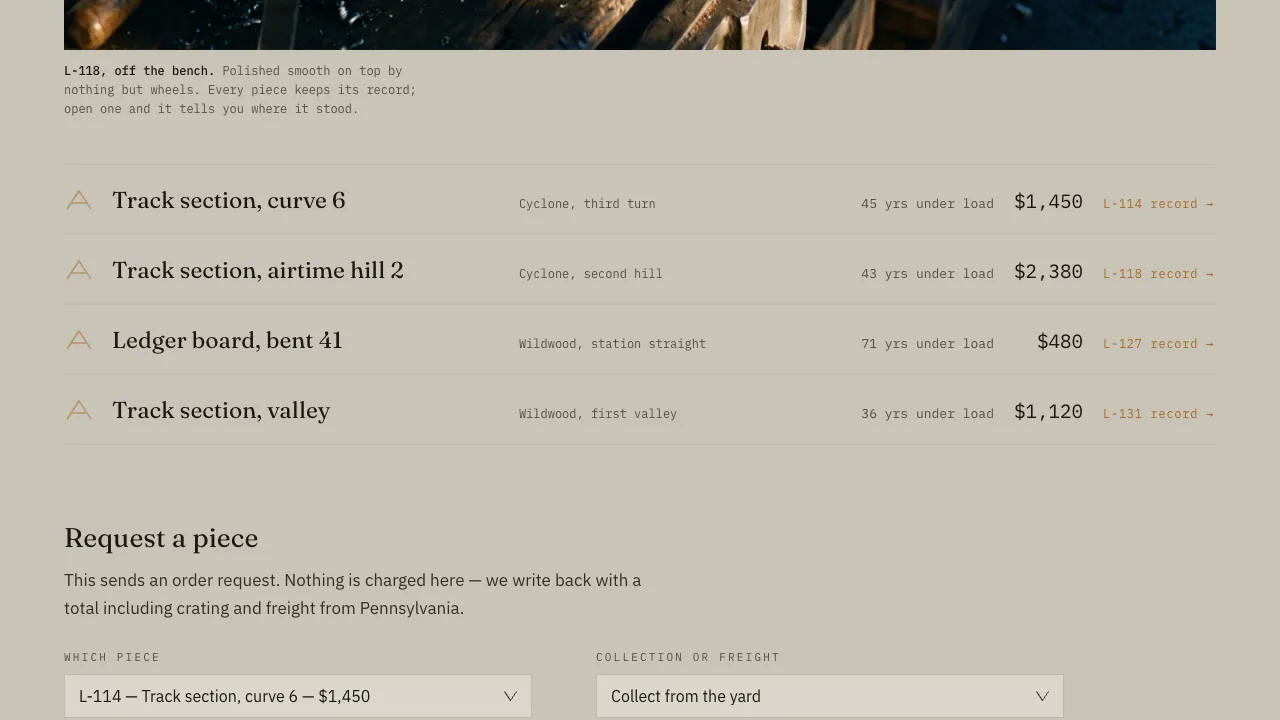
- Retracked timber sold by the piece, each with the ride, the curve, the years it spent under load, and a record that opens.