Foundry Series · Concept study
Barchetta
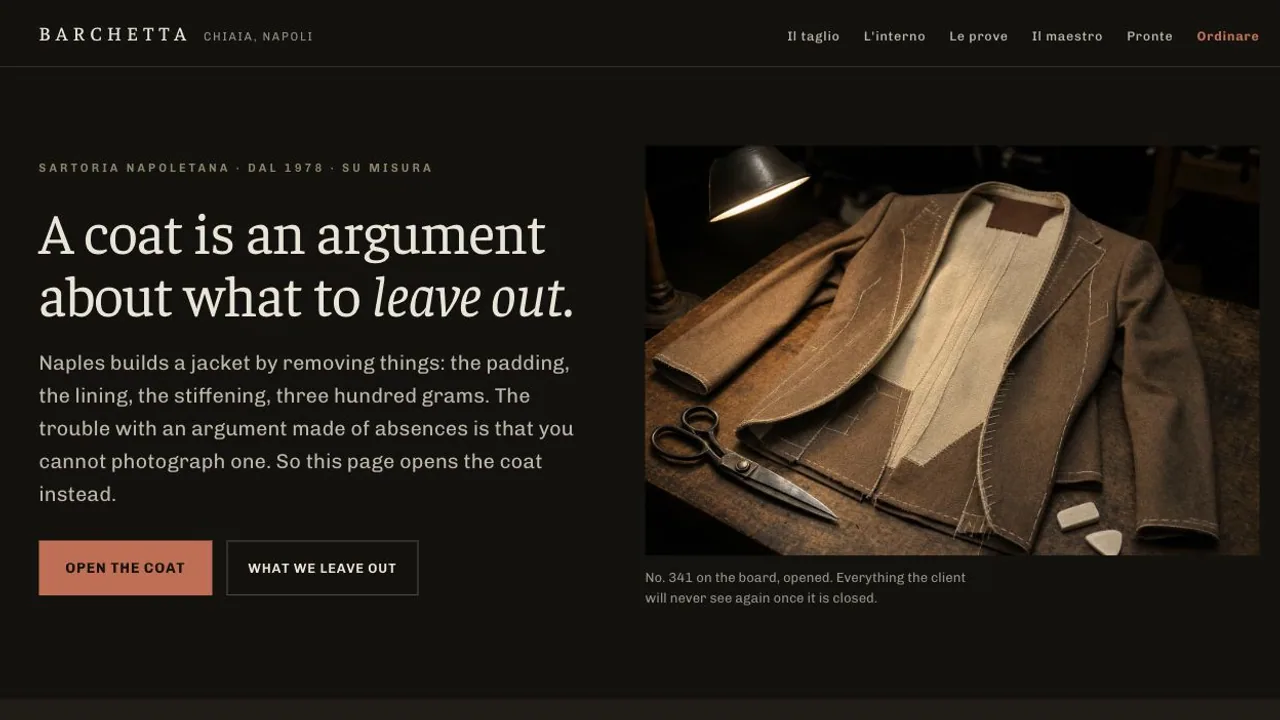
A coat is an argument about what to leave out.
Barchetta treats a Neapolitan tailoring house as a system of subtraction: less structure, less weight, and fewer barriers between cloth, maker, and wearer. The experience makes garment anatomy visible without sacrificing the restraint of the finished object.
The premise
A bespoke coat should make its reasoning visible.
Most luxury tailoring sites show the result while hiding the decisions that produced it. Barchetta treats those decisions as the product: what was removed, where structure remains, and whose hands shaped each stage.
The interface turns a quiet house philosophy into a repeatable system spanning doctrine, deconstruction, configuration, and maker attribution.
Product principles
The world becomes a working system.
01 · Restraint
Less is the specification.
Subtraction becomes an explicit set of rules rather than a vague aesthetic claim.
02 · Anatomy
The inside is part of the interface.
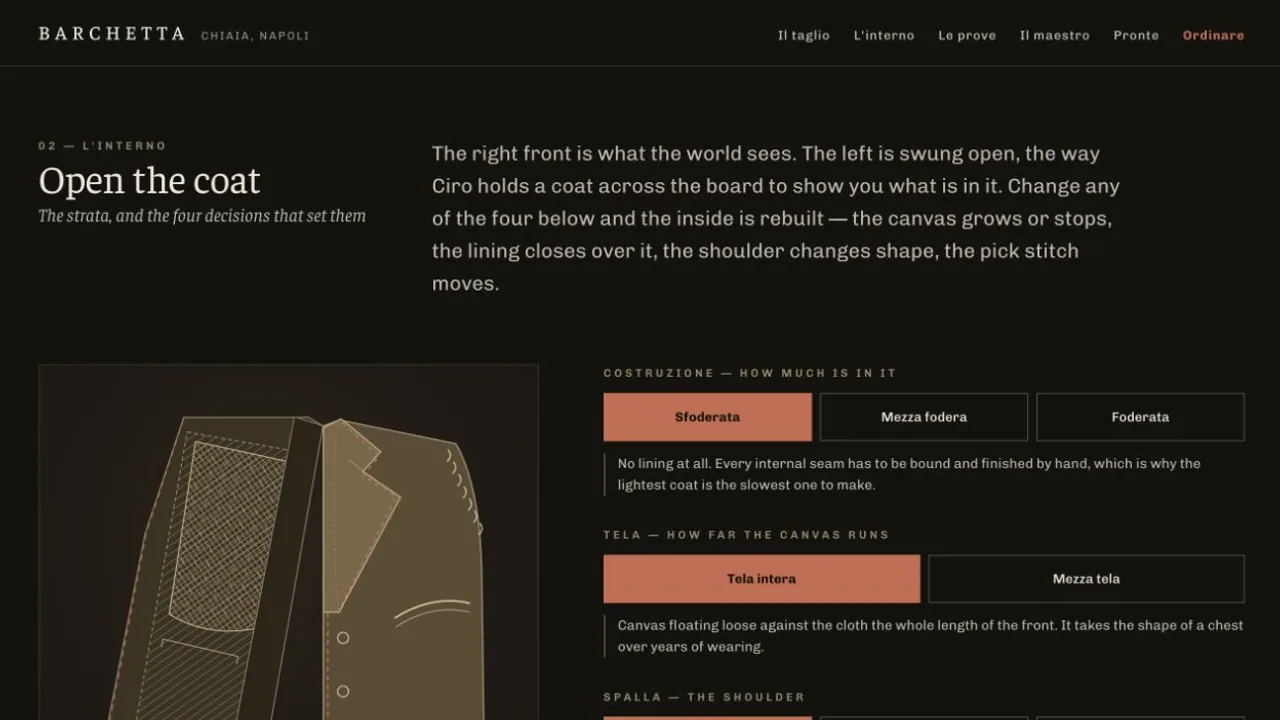
Construction layers and their consequences are exposed so the garment can be understood, not merely admired.
03 · Authorship
The work keeps its makers.
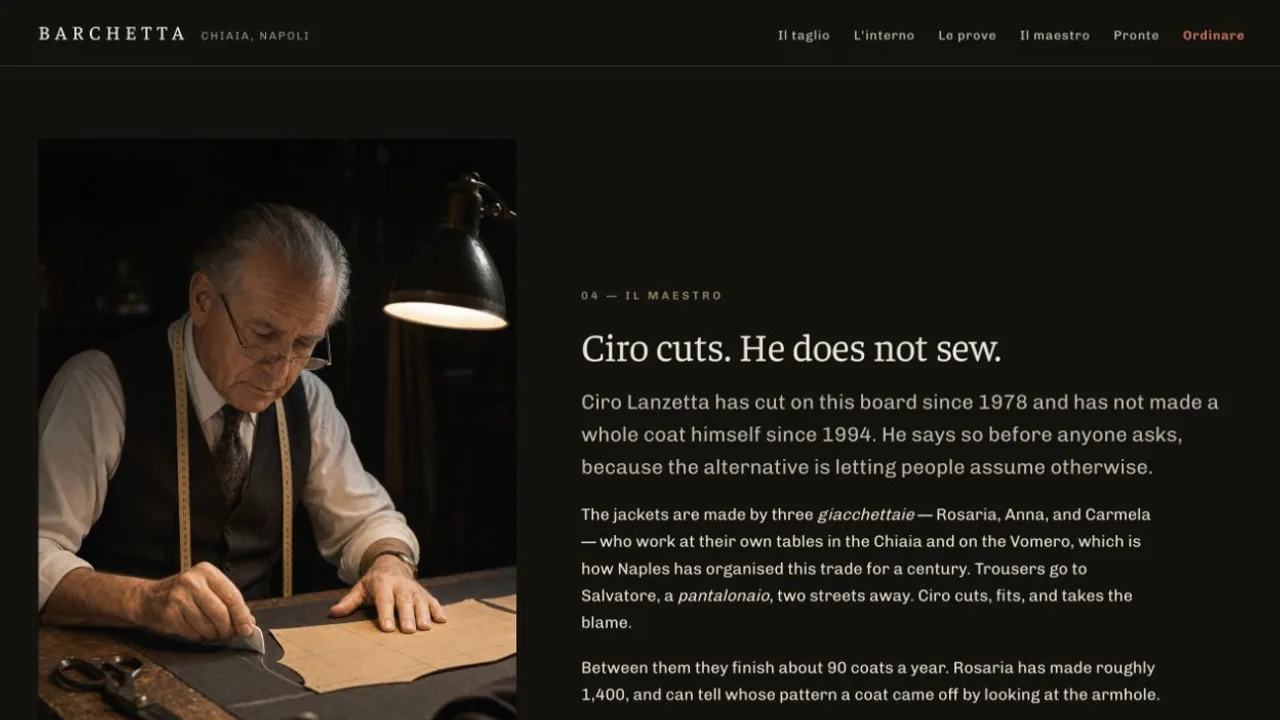
Cutter and maker contributions remain visible as distinct acts inside one coherent commission.
Built proof
A concept carried into code.
Systems thinking · Art direction · Garment configurator · Frontend
- Doctrine
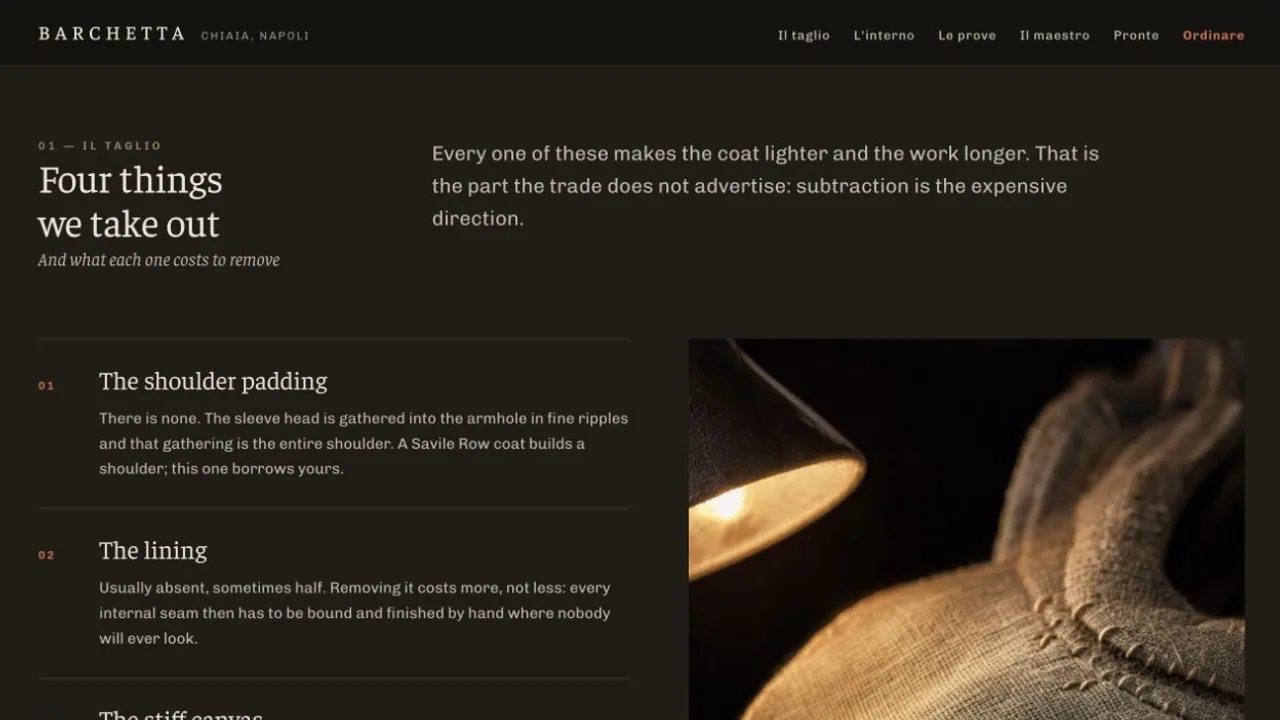
- A concise set of principles translates Neapolitan softness into rules the experience can repeat.
- Deconstruction
- An exploded garment view explains what is removed, retained, and allowed to move.
- Configurator
- Material and construction choices reveal consequences without turning bespoke work into a commodity form.
- Maker record
- The commission preserves the divided authorship of cutting, fitting, and making.